The Nearer Frontier
A rocket company built a top-six compute business in four quarters. The speed came from power the state agreed it did not have to permit, on the condition that it would not stay. The contracts inherited that condition. No builder spending at this scale is more exposed to what compute earns next year.
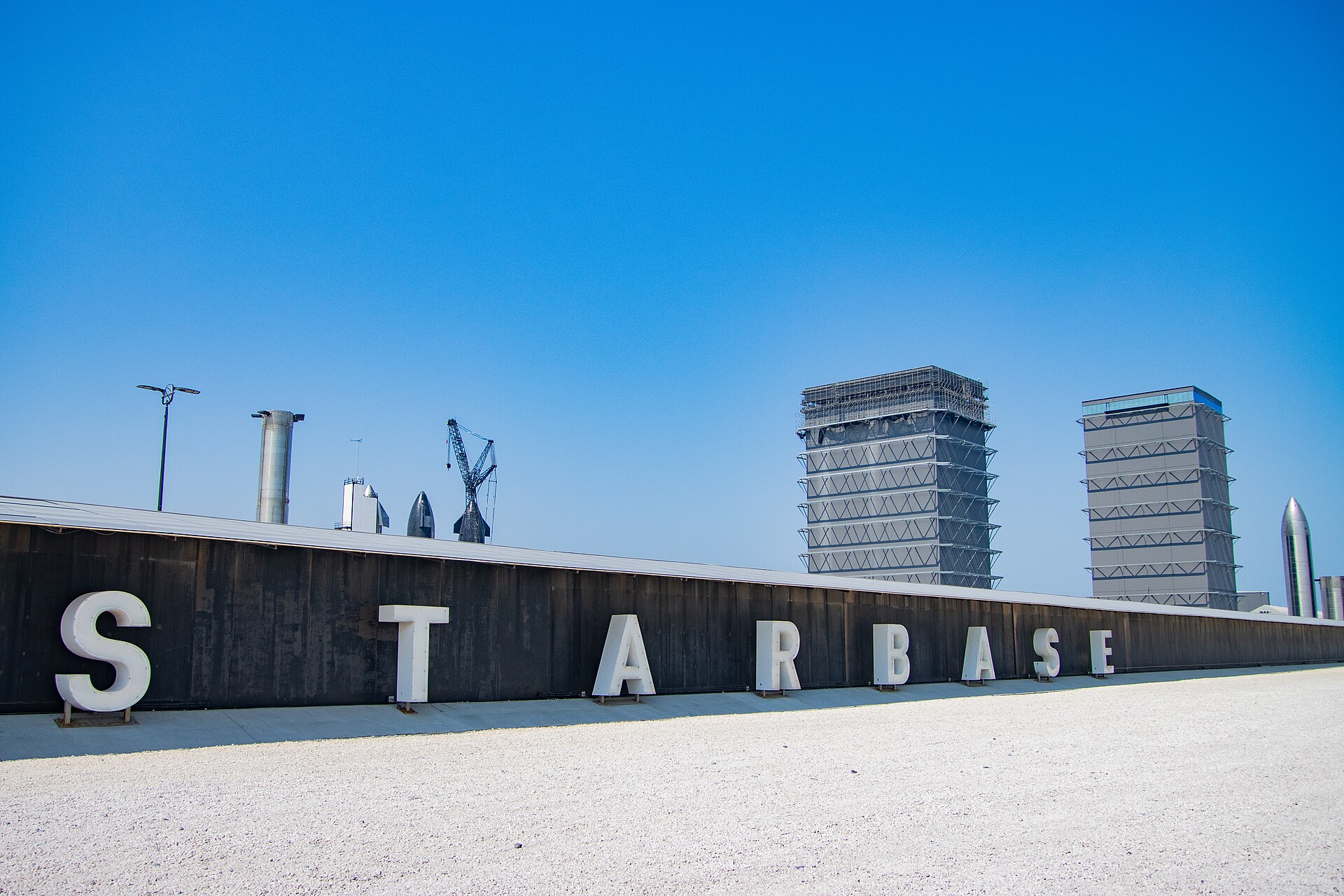
For two decades SpaceX was known for landing boosters and building the world's largest satellite network. It still does both. Its first quarterly filing as a public company, on August 4, describes a newer business running alongside them. A third of revenue now comes from selling compute: $2.56 billion in the quarter, most of it from roughly 325,000 GPUs serving Anthropic at $1.25 billion a month. The capital is not split that way. AI took $15.83 billion of the quarter's $18.37 billion, against $2.54 billion for rockets and satellites together. Musk's AI company, xAI, merged into SpaceX this February. SpaceX signed the Anthropic agreements in May. On the filings' own timeline, the turn from building compute to selling it took about one quarter.
The scale is easy to miss at that speed. SpaceX spent $20.7 billion across the whole company in all of 2025, building rockets, launch sites and satellites included. It spent $28.5 billion in the first half of 2026 alone, about 83% of it on AI. That half alone put $23.6 billion into AI, against $12.7 billion for all of 2025. The launch business, two decades in the building, now takes about one capital dollar in sixteen.
Capital expenditure is the cash measure in the segment note. It excludes AI hardware acquired through financing, so it understates what was added.
Amazon, Microsoft, Alphabet and Meta have been building data-center fleets for more than fifteen years. SpaceX reached comparable annual spending in about four quarters, from no compute business at all, while running a launch company and a satellite network. The ambition on the table is roughly 10 GW of compute by the end of 2027, five to seven times today's base.
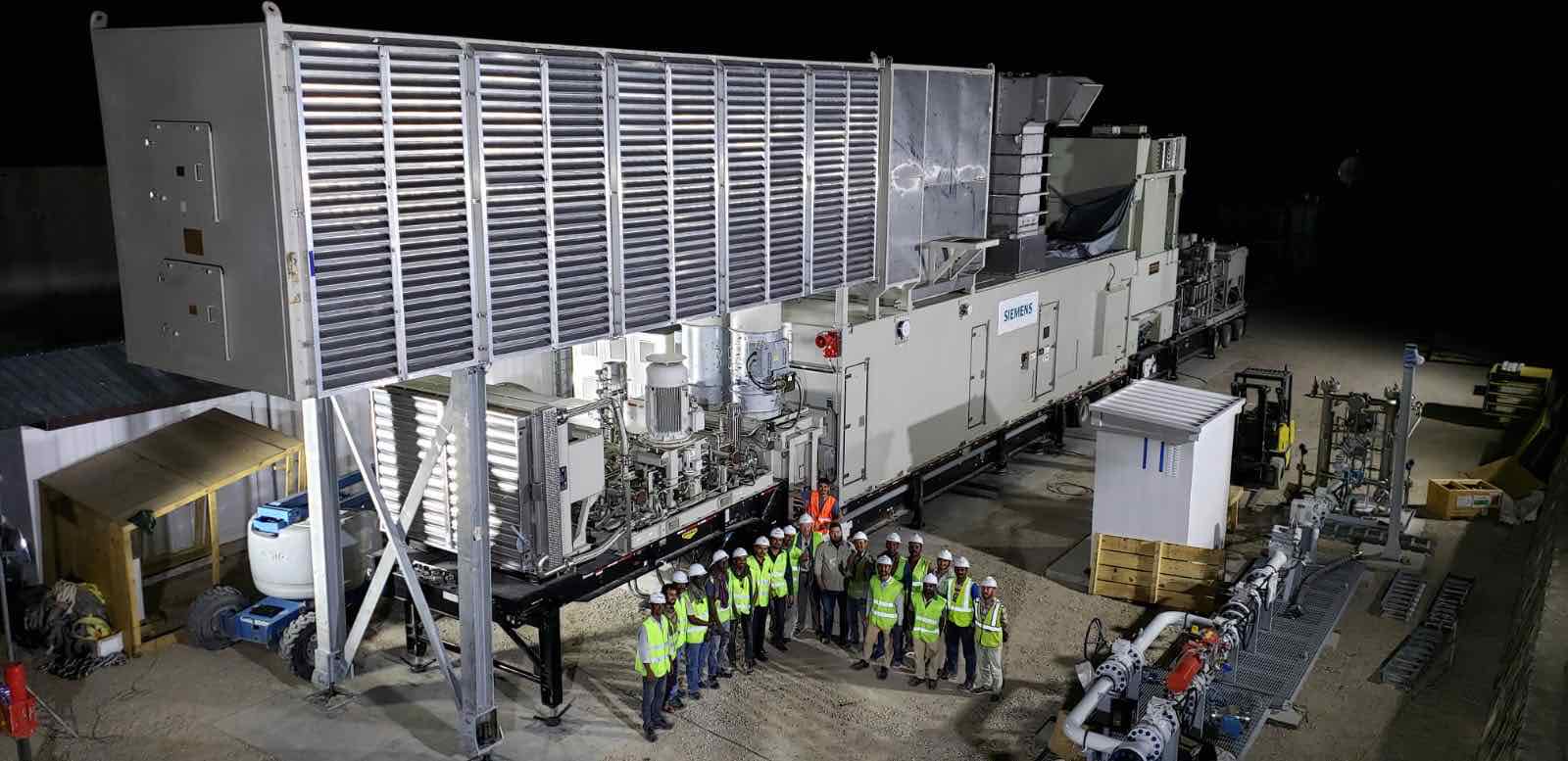
It moved that fast on power that was never permitted at all. Mississippi agreed that turbines bolted to flatbed trailers are not stationary sources, so the permit regime did not reach them. That finding rested on two conditions. The units stay mobile, and they do not stay long. Delivery took weeks instead of years. The exemption and the limit are therefore the same fact. Take the turbines off the trailers, or leave them in place, and they become ordinary stationary sources with ordinary permitting. Capacity held on those terms does not underwrite a five-year promise to a customer.
So the revenue book is short. Management describes the short book as a choice, and its own payback arithmetic supports the description. The effect is the same under either reading. A book that either side can exit in ninety days leaves SpaceX holding an exposure every other seller here has laid off. That exposure is the going rate of compute itself. What follows traces that term through the business: the power underneath it, how the book compares with everyone else's, and what it leaves SpaceX carrying.
1 · The speed and its clock
The GPUs sit in two data centers built by xAI before the merger, named Colossus 1 and Colossus 2. The first brought roughly 130 MW online in 122 days. The second brought 210 MW online in 91. The prospectus itself calls two years the industry benchmark for a 100 MW greenfield site, which puts the first build at roughly eight times that pace and the second at nearly seventeen. The mechanism behind that is regulatory before it is mechanical.
The turbines sit at one site, in Southaven, Mississippi, and they power Colossus 2 across the state line in Tennessee. The units ship in about 30 days, while big-frame turbine slots are sold out into 2029–31. On July 25, 2025 the company asked Mississippi's regulator whether they needed a permit. On July 29 the regulator agreed they did not, provided each unit stayed "mobile," meaning affixed to a flatbed trailer, and "temporary," which it recorded as an intention that each remain on site less than twelve months. The trailer is the legal basis of the speed. The first units arrived within weeks, and the fleet grew to 69 by this July.
The trailers were always meant to be a bridge. A permanent plant of 41 turbines, 1.2 GW, was approved at the same Southaven site in March 2026, and that is what is supposed to take over. It is roughly a year late on turbine supply, and its permit is under appeal. So the bridge has had to be extended. An agreed order dated July 30, 2026, between the state and MZX Tech, the subsidiary that operates the site, now sets a separate retirement date for each of the 69 units. One turbine must stop operating on August 18, 2026, and the rest follow one at a time until July 14, 2027. The order also lets 13 of them run past the original twelve months, on the stated grounds that the permanent plant is late. The number moved. The category did not.
The same market shows what that route bought. The behind-the-meter route delivered 400.5 MW in about 40 days. Over the same stretch, the grid route spent roughly 15 months getting 300 MW approved, and approval is not yet power. The fast route costs about twice as much as a grid connection. That premium is the price of the calendar, and nothing about it is proprietary. Anyone can buy the same turbines.
Now the 2027 question. Management's targets come in three layers. Over two gigawatts of compute this year. End-2027 compute "closer to 10 gigawatts of compute than five." And 20 GW of power and cooling as a "tentative target." Here is what stands between the fleet today and that number:
| Constraint | Where it stands |
|---|---|
| Physical New big-frame turbines | Slots sold out into 2029–31; prices up ~195% since 2019 |
| Physical The one firm turbine order (Doosan Enerbility, 5 × 380 MW) | At most 1.1 GW deliverable inside the window on Doosan's own delivery schedule |
| Regulatory The temporary-trailer exemption | No permit held; a July 2026 agreed order requires every unit to stop operating on its own date, the first Aug 18, 2026, the last July 14, 2027 |
| Regulatory The challenge to that exemption | Suit contends the mobile-source exclusion does not cover stationary equipment on trailers; injunction sought, hearing set for late August 2026 |
| Regulatory The permanent plant at Southaven, Mississippi | A permit was granted at 1.2 GW in March 2026, and is under appeal from April 2026 |
| Regulatory The grid route | ~15 months of approvals for 0.3 GW |
| Industry backdrop On-site gas conversion | ~101 GW announced across US data centers; about 2 GW operating |
| Industry backdrop Grid access tightening | Texas paused new data-center connections Aug 3, 2026, pending an audit of a 474 GW request queue |
Backdrop rows are national context, not SpaceX-specific; its compute sites are in Tennessee and Mississippi.
Derivation: how the 2.6–3.6 GW and the 13–16 GW are built
| Power source | GW | Credited by end-2027 |
|---|---|---|
| Temporary trailer fleet (69 units) | ~1.7 | 0 — all switched off by then |
| Permanent Southaven plant | 1.2 | 1.2 |
| Doosan turbine order | 1.9 | 1.1 |
| Solaris power JV | ~1.0 | 0–1.0 — no leases commenced at June 30 |
| Grid (TVA/MLGW) | 0.3 | 0.3 |
| Sum credited | 2.6–3.6 |
The need band applies the one off-grid comparable on record, 2.3 GW of generation behind a 1.4 GW campus (a ratio of roughly 1.6), to a 10 GW campus: off-grid sites carry extra generation for redundancy and cooling, with no grid to fall back on. A reader can recompute both bands from the inputs shown. On the trailer row, note that January's federal rule set an emission standard for temporary turbines and eased one permitting requirement for smaller units. It grants no authority to operate, and construction permitting is untouched. The live question for the fleet is the pending injunction, not that rule.
Count every turbine order, permit and grid approval on the record, and roughly 2.6 to 3.6 GW of permanent power can be running by the end of 2027. A 10 GW campus needs 13 to 16. Meanwhile the fleet that powers today's compute switches off unit by unit while the sprint runs.
Where the rest comes from is the open question, and the table above sets out what stands against each route. The published forecast that reaches 10 GW reads the same record a different way. It counts demonstrated deployment rate rather than announced orders, and that rate is real. The difference sits in one assumption. We credit the trailer fleet at zero because the agreed order switches every unit off before the window closes. It assumes the playbook repeats at new sites, on fresh determinations like the one Mississippi gave. Watch whether new temporary units are allowed at new sites while the Southaven fleet comes down.
Neither reading changes what the power is. It is capacity that exists because it was found not to need a permit, and that finding holds only while the equipment is leaving. The quantity is contested. The basis is not, and the basis is what the rest of the business has to be built on.
Here is what was built on it. The prospectus describes the business as "monetization of unused compute capacity." The fleet serves the company's own AI work first, and whatever is not consumed internally gets sold. Musk put training for Grok, the company's own model, at roughly a tenth of compute today. A seller in that position cannot promise years of capacity it may want back.
So the revenue is smaller and shorter than the coverage suggests. Trade reports describe "$40 billion contracted." The filed backlog is $47.5 billion, of which 56% is expected inside a year. The Anthropic agreement runs at $1.25 billion a month on paper through May 2029, and after the first three months either side can walk on ninety days' notice. Nothing here is promised further out than the power is.
2 · What everyone else contracted
The next two quarters are guided "very similar," which implies roughly $65 billion of company-wide capital spending for 2026. That puts it past Oracle for the year. But the size of the spending is not what separates SpaceX. What separates it is what stands behind it. Two things can stand behind spending on this scale. One is what the business already earns. The other is what customers have signed to pay.
Basis, dates and two caveats
Revenue is each company's most recent reported quarter times four, from its 10-Q or quarterly earnings release. The tick is the same ratio on trailing twelve months. Spending is the 2026 figure each company has stated, at the mid-point of a range.
Microsoft and Oracle are reporting a fiscal fourth quarter, their seasonal high, so annualizing lengthens their bars. CoreWeave had not filed its June quarter and sits on a March anchor, which shortens its. Both caveats are visible as the gap between bar and tick. Neither changes the order.
Amazon guided $220B, raised from $200B. Alphabet guided $195–205B. Microsoft guides about $175B for calendar 2026, revised down from $190B by an accounting change that moves some leases out of capital spending rather than reducing what it plans to spend. Meta guided $130–145B. Oracle's is fiscal-2026 actual spending. CoreWeave guided $31–35B. SpaceX gave no figure. Its $65B annualizes the June quarter at the guidance that the next two would look "very similar," so it is the only spending number here that is our arithmetic.
These guidance figures are not built the same way either. Meta states its range "including principal payments on finance leases," and Microsoft's measure counts finance leases too, which is why its own reclassification moved the number without changing what it plans to spend. Amazon guides "cash capex." A reader comparing two rows to a second decimal is comparing different constructions. The ordering is what holds.
Start with what the business takes in. Every hyperscaler here takes in more than it plans to spend, Amazon by more than three times. Oracle is the tightest of them at about 1.4. SpaceX takes in roughly half of what it intends to spend this year, and CoreWeave about a quarter. Neither can fund a buildout this size from the business as it stands.
What counts as backlog, and how far it compares
Each company's remaining performance obligations, or its closest reported measure. Microsoft's $678B is commercial RPO across all durations, up 84% in a year. Alphabet's $519.5B has included contracts of a year or less since the first quarter of 2026, and $513.9B of it is Google Cloud. Amazon's $496B covers only contracts running beyond one year, carries a 6.4-year average life, and is stated as additional to unearned revenue rather than including it. CoreWeave's $98.8B is RPO at March 2026, a quarter behind the rest, and its filing puts take-or-pay at 98% of revenue. SpaceX's $47.5B is labeled backlog and tagged as RPO, and $14.3B of it is deferred revenue. Meta is absent because it sells almost no external capacity.
The definitions do not align, and three gaps matter. SpaceX reports one backlog for the whole company, so its figure carries rockets and Starlink alongside compute, while Microsoft's and Alphabet's cover cloud alone. Its spending figure is company-wide too, so that much is at least consistent within the row. And of the six, only Alphabet states what it does with contracts a customer can cancel. The rest are silent, SpaceX included, whose largest agreement carries a ninety-day exit. Each of those gaps flatters SpaceX. The ordering is what holds, not the precise multiple.
Everyone else builds against orders in hand. Oracle is the extreme case, with eleven years of its current spending already signed. CoreWeave, the largest dedicated compute seller, has three. SpaceX is the only seller here spending more this year than customers have signed to pay it, and its revenue backlog is the one that can be cancelled. The pattern repeats on the buying side. Its own filing is direct about suppliers: contracts "generally do not have long-term binding and enforceable purchase orders." The NVIDIA relationship ("our understanding with NVIDIA is that we will receive a very significant percentage of their GPUs next year") carries no filed dollar or volume terms. Little is locked in either direction. Of the sellers here, SpaceX has committed the least and kept the most exposure.
Some of that backlog is already cash. $14.3 billion of it is deferred revenue, received for compute not yet delivered. Prepayment is real, and it is not large. That sum covers about five months of current spending against a buildout that runs for years. The customers are not funding obligations this size out of earnings either. They are borrowing. The $35 billion private-credit vehicle that buys chips and leases them to Anthropic closed in June, and a second package of at least $36 billion was pitched on August 4 [→ /credit].
There are three ways to pay for capacity at this scale: out of what the business already earns, by borrowing against revenue customers have promised, or from the capital markets. The hyperscalers lean on the first. CoreWeave and the credit vehicles use the second. SpaceX used the third. Every GPU-backed loan and facility in our credit ledger, across every issuer since 2023, comes to about $41 billion [→ /credit]. SpaceX raised more than twice that in ninety days, without pledging a chip or a customer contract.
The three do not renew the same way. Operating cash flow arrives every quarter. Contracted revenue renews as new contracts sign. Market access has to be sought again, at whatever price the market sets that day. The others here can fall back on earnings or on signed contracts. SpaceX has neither.
3 · SpaceX is long the price of compute
Management's case for the ninety-day exit is payback speed. The CFO told the August call that new compute capital pays back in under a year: "It's almost like your capital is becoming almost an item that you would put otherwise in COGS because it's moving so quickly." Read against that claim, a book anyone can exit in a quarter is not reckless. It is duration-matched. A campus that takes twenty years to earn out gets a twenty-year lease. A rack that pays back inside a year does not need one.
Today's rate is knowable from the filings. At the filed terms, the Anthropic book prices out at roughly $5.27 per nameplate GPU-hour, which is $1.25 billion a month spread over the calendar hours of 325,000 GPUs. It blends a mixed fleet, so it is not a like-for-like against the single-chip rates we publish [→ /rates], but it is a clear look at what one frontier lab pays for delivered capacity.
SpaceX's own prospectus uses about $3.33 per GPU-hour as the market reference in its addressable-market arithmetic. The two are not measuring the same thing. The $3.33 is a 2025 median across neoclouds, weighted toward older silicon, and the fleet here mixes H100 and Blackwell parts. Part of the gap is what is in the rack rather than when it arrived.
Every multi-year book in this market exists for a reason. CoreWeave sells years of take-or-pay, with a backlog that runs out to 84 months, because its lenders require contracted revenue before they will finance a GPU. The hyperscalers sell duration without that constraint, discounting committed capacity below the on-demand rate to get it, which is a trade our own term curve shows them making [→ /term]. No lender is making them do it. They are buying certainty of demand.
SpaceX makes neither trade. Staying short buys it three things.
- Nothing beyond a quarter is committed. What the fleet earns after that follows the market rather than a multi-year term. That pays while capacity is scarce, and works against them when it is not.
- Capacity can return to internal use on ninety days' notice, instead of waiting out a contract.
- Nothing is discounted for duration. Committed capacity elsewhere in this market trades a lower price for the commitment.
Two of those three hold only while the market is tight. Reclaiming capacity is the one that works in either direction.
A second explanation is less voluntary. A seller cannot promise what it may not have. The turbines behind the current fleet hold no permit, and the finding that they need none depends on their leaving. Every unit now has a retirement date. The permanent plant meant to replace them is under appeal, and a court has been asked to stop the turbines in the meantime. Power held on those terms does not support a five-year commitment to a customer. The ninety-day exit is not only a choice about price. It is the revenue book inheriting the tenure of the power underneath it.
The same short book limits the damage if that power stops. A customer that can leave in ninety days is also an obligation that ends in ninety days. A five-year take-or-pay against capacity that cannot be powered would be the worse place to stand.
The cost is symmetrical. If the market rent of a GPU holds, sub-year paybacks make the structure self-financing. If it falls, there is no contracted floor to catch it. A customer that leaves on ninety days' notice leaves the hardware behind, and that capacity has to be re-let at whatever the market pays then. The equipment keeps running. It just earns less, over a life that now outlasts the payback the spending assumed.
The two sides of that trade move against each other. Behind-the-meter power costs about twice a grid connection, which is affordable while capacity is scarce and priced accordingly. Add supply and the premium compresses, but the cost base does not. Speed bought at a premium has to be sold at one.
Everyone in this market is long the demand for compute. Contract structure decides who is long the price. CoreWeave sold that exposure forward, and 98% of its revenue now comes from committed contracts. SpaceX did not, and the reason is narrower than it first looks. Its largest agreement runs three years on paper, at a fixed monthly fee. The price is not what moves. The term is. Either side can end it on ninety days' notice, so nothing past a quarter is settled, and what replaces it would be sold at whatever the market pays then.
Both sides hold that exit, but they would not use it in the same world. A customer leaving to buy the same capacity cheaper is an ordinary procurement decision. A seller leaving to chase a higher rate has to do it to its largest customer. The downside of this structure travels more easily than the upside. Few balance sheets in this market are more directly exposed to the going rate of compute. That is the number this firm exists to publish.
Nothing requires the next contracts to look like the current ones. Whether new agreements keep the ninety-day exit as the buildout scales is the clearest disclosure to watch. The tenor of a seller's book shows this exposure before any price does.
The founding mission is unchanged. The order of operations is not. In its first quarter on the public record, selling compute brought in $2.56 billion, nearly three times what the space business did. The ambition on the table is roughly ten gigawatts by the end of 2027. Permanent power on the record reaches 2.6 to 3.6. Until the rest is both built and permitted, the contracts on top of it cannot lengthen, and SpaceX stays exposed to the price of compute.
Sources & method
Figures are from SpaceX's 10-Q for the quarter ended June 30, 2026, its June 424B4 prospectus, the August 4 earnings call, each comparison company's latest 10-K, 10-Q or quarterly earnings release, and the Mississippi and Tennessee regulatory records covering the exemption determination, the permits granted, the July 2026 agreed order and the pending challenges. Where a company reports on a fiscal year that does not end in June, its quarter end is shown on the exhibit rather than aligned to the others. We verified call quotes against two independent transcript services; the official transcript was not posted when we checked. Press-reported figures are attributed in the text where used. The two range estimates (buildable power by end-2027, and the generation requirement) are our arithmetic from the sourced inputs shown beside them. A reader can recompute both. Research notes are dated, not updated in place.